SB 1383 and the manufacturing pathway
The ACM facility must be classified under California manufacturing codes — not solid waste disposal codes — before Carbotura will execute the CSA. This requires CalRecycle and CalEPA confirmation that the MCR process constitutes manufacturing, not disposal. This classification also determines SB 1383 compliance credit treatment for organic material diversion.
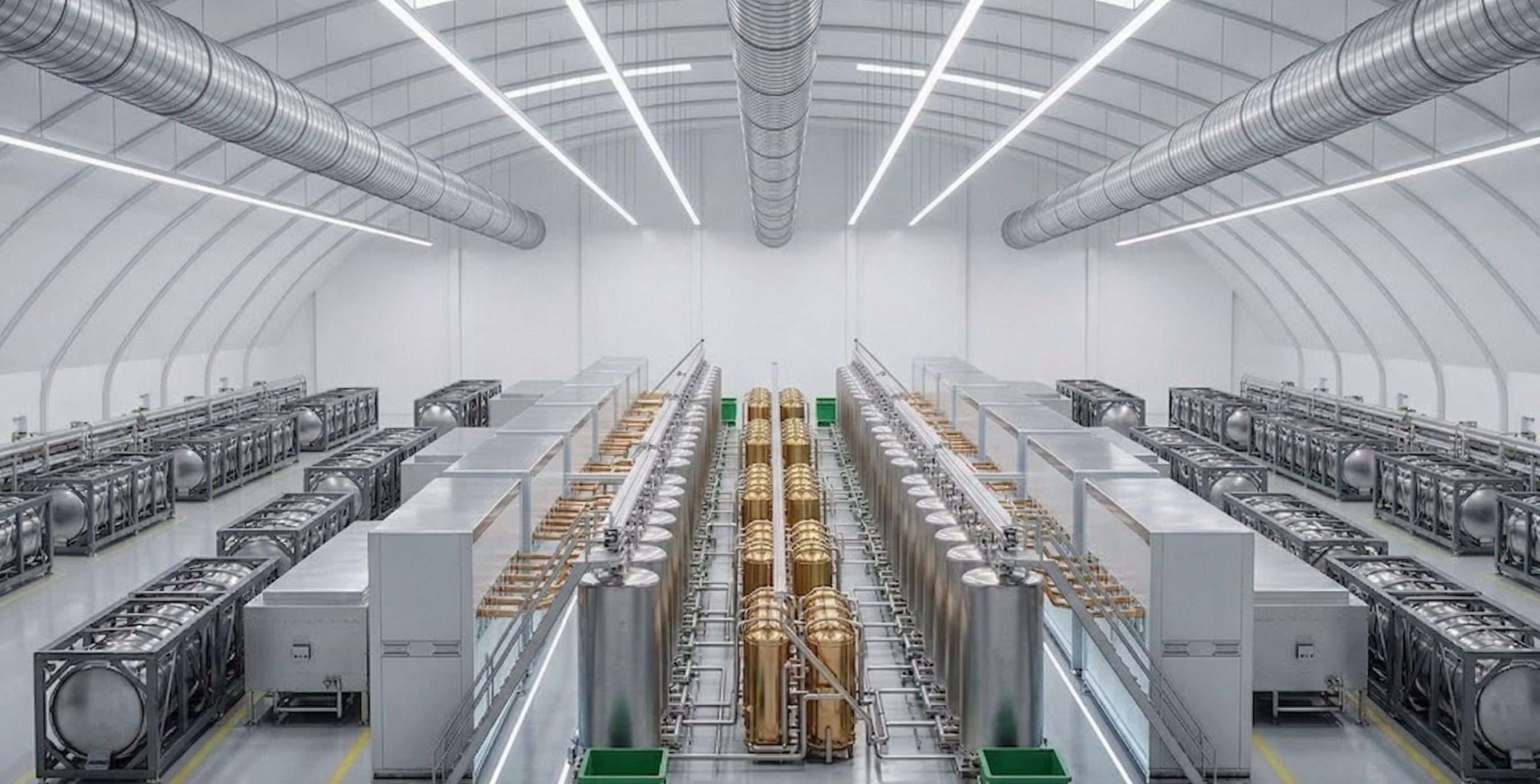
Carbotura builds, owns, and operates Advanced Circular Manufacturing (ACM) facilities under 30-year Circular Supply Agreements. The MCR process converts residual MSW, organics, and agricultural waste fractions into synthetic graphite, graphene compounds, and recovered minerals — anoxic, oxygen-free, no combustion, no air emissions.
The Salinas Valley produces substantial organic and agricultural waste streams beyond the standard MSW composition — food processing residuals, agricultural field waste, and commercial organic fractions that face increasing compliance pressure under SB 1383. ACM processes all of these streams under manufacturing classification — the constraint is access, not capability. Addressability is determined by collection logistics and regulatory classification, not by what the process can handle.
Phase Initial at 300 TPD (100,000 TPY) begins with the most immediately accessible streams. The Johnson Canyon Landfill — currently a disposal liability — qualifies as an Exogenesis™ Royalty candidate, converting a closing or capacity-constrained asset into a structured royalty stream without altering primary CSA terms.
At ~$160/ton FWDC, the Salinas Valley system carries one of the highest verified disposal costs in the Carbotura portfolio. The $100/ton Beneficiation Fee delivers immediate per-ton cost relief in Year 1 — and the Circular Royalty™ from Year 2 returns more than the fee paid.
Five structural facts for Salinas Valley
Salinas Valley's full-system disposal cost of approximately $160/ton — reflecting California's landfill gate rates, long-haul transport, and environmental compliance costs — is significantly above the Beneficiation Fee of $100/ton. Year 1 gross cost displacement: approximately $60/ton on 100,000 TPY = ~$6.0M/yr. This is the highest gross displacement spread in the US portfolio, before royalty.
California's SB 1383 requires jurisdictions to divert 75% of organic waste and recover 20% of edible food. Non-compliance triggers enforcement actions. The Salinas Valley's agricultural processing fractions — food waste, organics, field residuals — are eligible feedstock under ACM manufacturing classification. Diversion via manufacturing pathway satisfies the recovery requirement in the most defensible classification available.
Year 1 Beneficiation Fee at Phase Initial (300 TPD): $10.00M. Year 2 Circular Royalty™: $12.00M.
The Johnson Canyon Landfill in Monterey County has been identified as a candidate for the Exogenesis™ Royalty — converting legacy landfill material into a structured dual-stream payment. At California disposal cost levels, a closing or capacity-constrained landfill represents a significant ongoing liability. The Exogenesis™ Royalty converts this liability into royalty income without altering primary CSA terms. Subject to Waste Characterization Study confirmation. Available under the CSA.
Phase Initial creates approximately 144 direct manufacturing jobs across operations, maintenance, logistics, and quality control — roles suited to the Valley's existing industrial workforce base. At Phase Expanded, employment scales proportionally. These are manufacturing roles that remain in the Valley for the full 30-year CSA term, unlike agricultural or seasonal employment.
Two paths for the Salinas Valley Solid Waste Authority
- Beneficiation Fee: $100/ton, 2.5%/yr escalator
- Circular Royalty™: 120% of the current-year Beneficiation Fee, +1pp/yr
- Royalty commencement: Month 13 after corresponding Beneficiation Fee payment (rolling monthly)
- 30-year CSA term, perpetual continuation language
- Parent Performance Guarantee
- Regulatory Predicate Transition (RPT) required — CalRecycle/CalEPA
- US GAAP / GASB accounting treatment
The Johnson Canyon Landfill in Monterey County has been identified as a qualifying candidate for the Exogenesis™ Royalty — a structured dual-stream payment for legacy landfill material, structured as a separate agreement appended to the primary CSA. At California landfill costs (~$160/ton baseline), the liability profile of a closing landfill is substantial.
The Exogenesis™ Royalty converts accumulated legacy material into a structured income stream without altering primary CSA terms. Available under the CSA. Subject to Waste Characterization Study confirmation.
Subject to Waste Characterization Study confirmationKey figures at a glance
vs. ~$160/ton FWDC
($160 − $100) × 100,000 TPY
Salinas Valley-based
Employment in the Salinas Valley
Phase Initial (300 TPD)
Phase Medium (600 TPD)
Phase Expanded (900+ TPD)
Circular Royalty™ projections — 300 to 900 TPD
Fee and Circular Royalty™ shown independently per the Separate Transaction Principle. Gross cost displacement shown separately.
| Capacity | Annual TPY | Fee · Year 1 | Royalty™ · Year 2 | Gross Displacement · Yr 1 | FTE |
|---|---|---|---|---|---|
| 300 TPD ← Phase Initial | 100,000 | $10.00M | $12.00M | ~$6.0M | ~144 |
| 600 TPD · Phase Medium | 219,000 | $21.90M | $26.28M | ~$13.1M | ~290 |
| 900 TPD · Phase Expanded | 328,500 | $32.85M | $39.42M | ~$19.7M | ~430 |
Gross Displacement = (FWDC ~$160 − BF $100) × TPY. Royalty™ (Year n) = (120% + (n−1)pp) × that year’s Beneficiation Fee. FWDC ESTIMATED. At steady state, the Circular Royalty™ is designed to exceed the Beneficiation Fee on a per-ton basis. Beneficiation Fee and Circular Royalty™ shown as gross independent items per the Separate Transaction Principle.
The election governs asset treatment and royalty basis. The CSA differ in their fee structure, royalty basis, and balance sheet treatment.